Real Estate & Investment · Guide
Buying a riad in Marrakech: the guide, from studded door to land register
In 2026, an inconspicuous rule changed the cost of some riad sales. Since 1 July, when a house priced at more than 300,000 DH is paid for wholly or partly in cash, or the deed does not specify how it was paid, 2 percentage points of registration duty are added: on the cash portion alone if the rest was settled by lawful means. It is only one detail among many, but it captures the essentials: buying a riad is as much a matter of procedure as of love at first sight.
Here is the purchase in order, from the first viewing to entry in the land register.
1. Before falling in love, ask about the status
The first question for the seller, before even discussing price: is the riad titled, under réquisition or held in melkia?
- Titled: a recent certificate of ownership (100 DH from the Conservation foncière, the land registry) shows the owners, encumbrances and mortgages.
- Under réquisition: the registration procedure has been opened, but the title does not yet exist.
- Held in melkia: ownership rests on deeds and on possession, until proven otherwise (see the difference between melkia and a land title).
The answer changes everything else: the checks, the financing and often the price.
2. Look at the house with an engineer’s eye
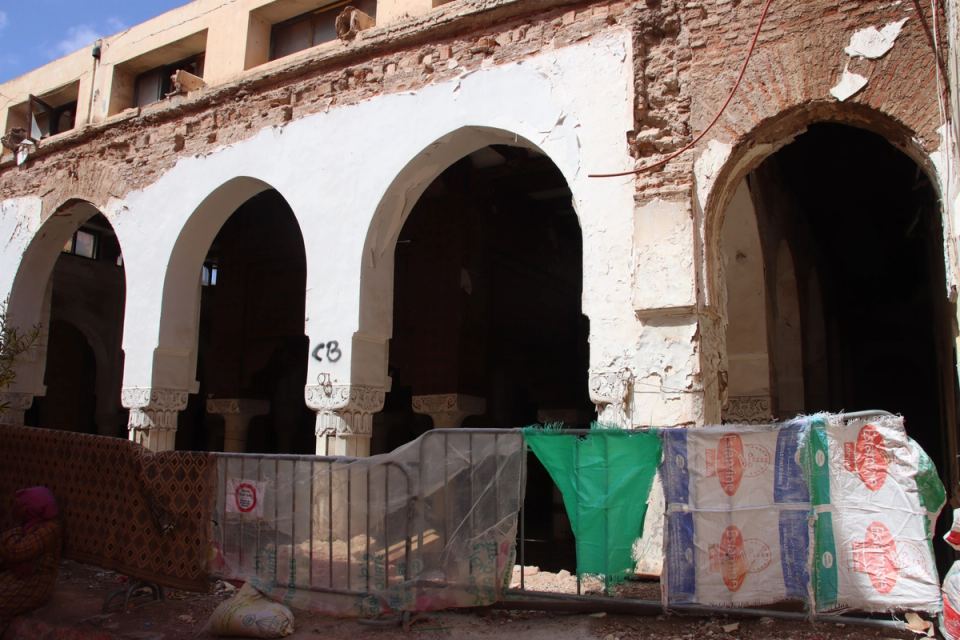
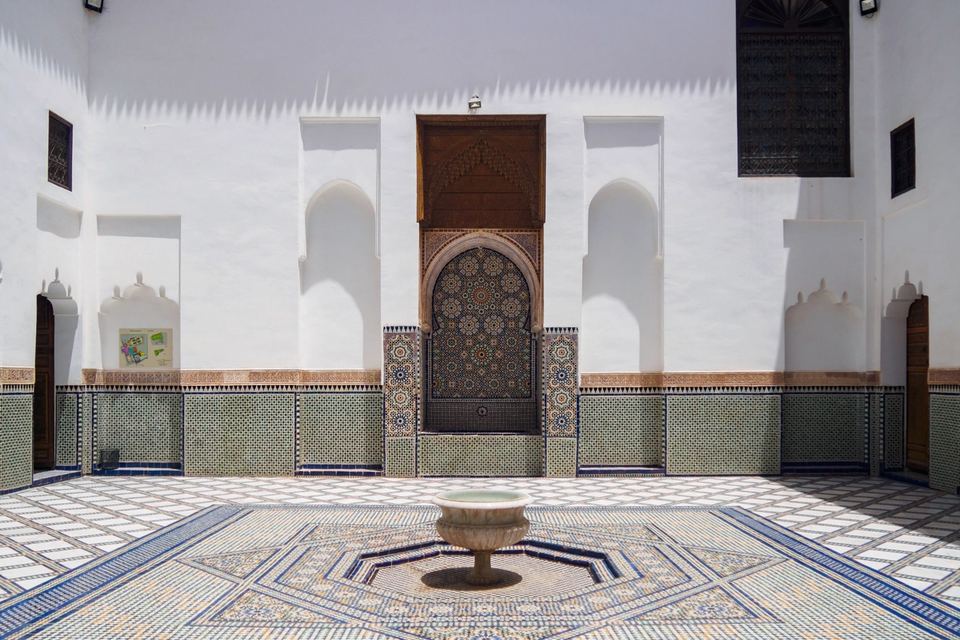
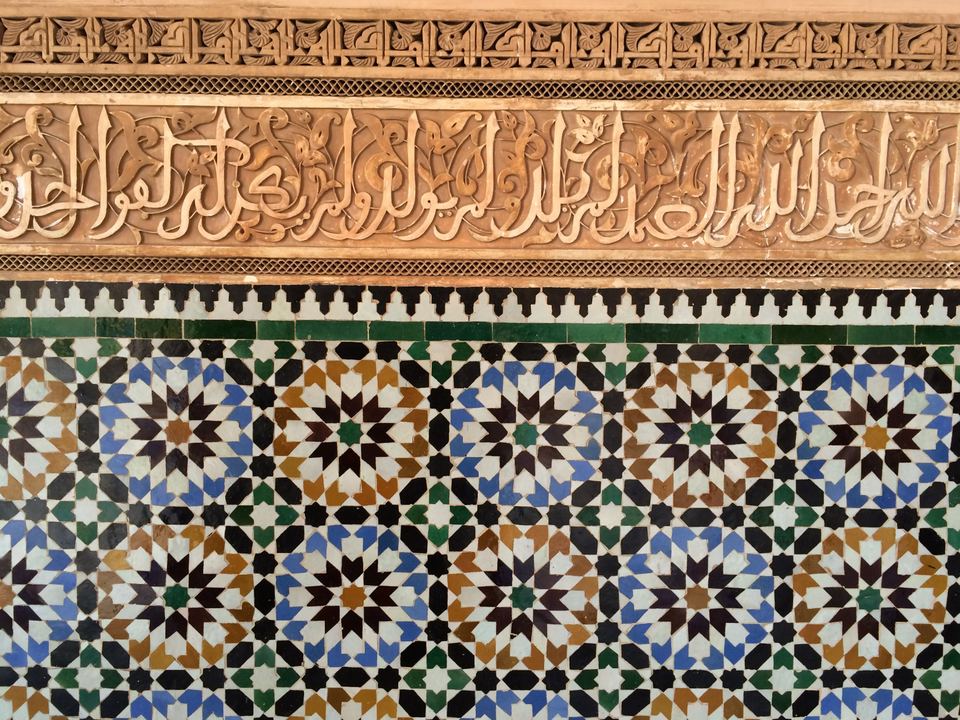
Immaculate zellige, the glazed mosaic tilework, can hide a tired beam. Visit with an architect or an engineering firm: load-bearing walls and cracks, damp, wooden ceilings, waterproofing of the roof terrace, utility networks, and the compliance of any work already carried out.
3. Check what you will be allowed to do
Dreaming of a suite on the roof terrace, or of a guest house? Ask the urban planning agency about the rules for the area, and the heritage department if the property is protected.
4. Sign in due form
The sale is concluded by authentic deed, before a notary or adoul (traditional notaries). Since Law 41.25 (Official Bulletin No. 7526 of 16/07/2026), a deed drawn up by a lawyer admitted to practise before the Court of Cassation is no longer accepted. Without an authentic deed, the sale is void (Law 39-08, Art. 4). A preliminary contract may precede the deed, with conditions precedent to be negotiated: a certificate free of encumbrances, obtaining a loan.
5. Pay in a traceable way
For deeds executed since 1 July 2026 (Finance Act No. 50-25 for 2026, Art. 7, Official Bulletin (BO) No. 7465 bis of 16/12/2025), an additional registration duty of 2% applies to sales of immovable property or of real rights in immovable property whose price exceeds 300,000 DH. It is due in only two cases: the deed does not state the terms and references of the payment, or the price is not paid by a method provided for in Article 11-II of the General Tax Code, or CGI (non-endorsable crossed cheque, commercial paper, magnetic means of payment, bank transfer, electronic process, documented set-off). If the price is paid partly in cash, the duty applies only to that part (CGI, Art. 133-III).
What the tax administration specifies (circular note No. 737 on the tax measures of the 2026 Finance Act, and clarifications reported in the press, Médias24 of 30/06/2026 and Hespress of 13/07/2026: administrative positions, not statutory text):
- a bank loan provided for in the deed does not trigger the duty;
- the deposit provided for in Article 193 of the CGI is accepted as a method of payment, provided that the deed states its references;
- advance payments made before the deed by non-endorsable crossed cheque are accepted if their references appear in the final deed;
- the duty is calculated on the price declared in the deed;
6. Costs, item by item
| Item | Amount | Condition | Source |
|---|---|---|---|
| Registration duties | 4% of the price | Built property, including land up to 5 times the covered area | CGI 2026, Art. 133-I-F-1° |
| Additional duty | 2% | Sales over 300,000 DH, only if the deed does not reference the payment or the payment is not made by a legal method; for mixed payments, on the cash portion alone. Avoidable. | CGI 2026, Art. 133-III; Finance Act No. 50-25 for 2026, Art. 7 |
| Conservation foncière (titled property) | 1.5% of the price | Registration of the transfer | ANCFCC fee schedule |
| Duplicate of the title | 200 DH | ANCFCC fee schedule | |
| Notary, adoul or lawyer | On quotation | — | |
| Technical survey | On quotation | — |
A riad held in melkia does not incur the land registry fee on purchase, but its registration will come at a cost: around 1% in duties, plus fixed fees (see registering a riad).
7. After signing, stay alert
- Titled property: have the deed registered within three months. Beyond that, a penalty applies: 5% of the duties for the first month, then 0.5% per month (1913 dahir, Art. 65 bis).
- Property under réquisition: file your right with the Conservation to secure your rank (Art. 84).
- Property held in melkia: start the registration process (see registering a riad).
The right riad is the one you can sell one day without having to explain yourself. Everything else can be renovated.
Sources
- Law 39-08, Art. 4, as amended by Law 41.25 (Dahir No. 1-26-30 of 03/07/2026, Official Bulletin No. 7526 of 16/07/2026)
- CGI 2026, Arts 133-I-F-1° and 133-III
- Circular note No. 737 on the tax measures of the 2026 Finance Act
- Médias24, 30/06/2026
- Hespress, 13/07/2026
- EcoActu, 10/09/2026 (clarification of 04/09/2026, not officially confirmed)
- Dahir of 12 August 1913, as amended, Arts 65 bis and 84
- ANCFCC fee schedule
The Newsletter
The essentials on Marrakech riads, every week.
Market, heritage, renovation and law: a selection by our editors.